

We Broke Down Duolingo's Marketing Strategy (A Case Study)


Learning languages is boring.
At least, it sounds boring.
Does memorizing vocabulary, repeating phrases, or practicing grammar make you think: "We can't wait to see what this brand posts next?"
Yet somehow, Duolingo turned a language-learning app into one of the most recognizable consumer brands on the internet.
You don't even have to use Duolingo to know the green owl.
Don't believe us?
Take a look at the numbers.
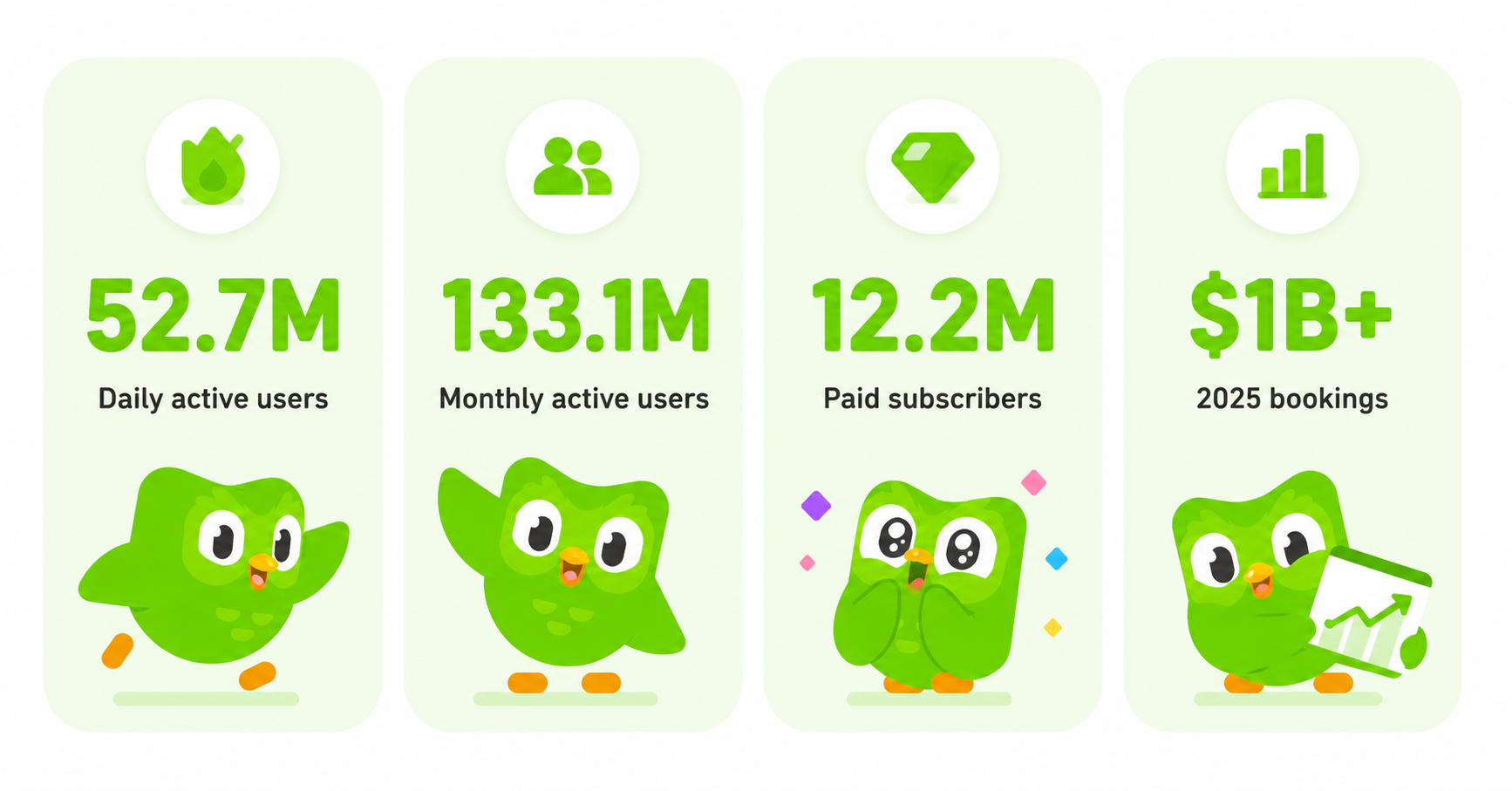
But the interesting part isn't just how many people use Duolingo. It's how often the brand shows up outside the app.
From its social content to its campaigns, videos, memes, and online personality, Duolingo has turned digital marketing into a way of staying in people's heads long after they close the app.
This isn't really a story about how Duolingo made a funny mascot or created entertaining content.
It's about how a company built a brand people remember, return to, and most importantly, talk about.
So how did Duolingo turn a boring product into a brand that people can't ignore?
We studied Duolingo's Marketing Strategy and broke down exactly how they did it in this blog.
That's what we're going to break down.
How Duolingo Built a Brand Around Duo Owl?
Most companies have a logo.
Duolingo has Duo.
At first glance, he's just a green owl.
But over time, Duo turned into something much more valuable: a character with a personality, a voice, and a very questionable approach to reminding you to do your Spanish lesson.
Duolingo itself describes Duo as persistent, supportive, emotional, slightly awkward, and "extra."
And that personality, no matter where you see Duo, stays consistent, whether it's the app, email campaigns, YouTube, Instagram, or even the company's push notifications.
Here's where it gets interesting.
In 2025, Duolingo "killed" Duo.
What started as a marketing stunt turned into a massive online frenzy.
That single two-week campaign generated 1.7 billion social impressions and around 160,000 pieces of user-generated content.
A mascot can make a brand recognizable.
But Duo became much more than that. He became a personality that people could recognize, joke about, and, apparently... mourn for.
So Duo isn't just there to make the app look cute.
He's doing a job.
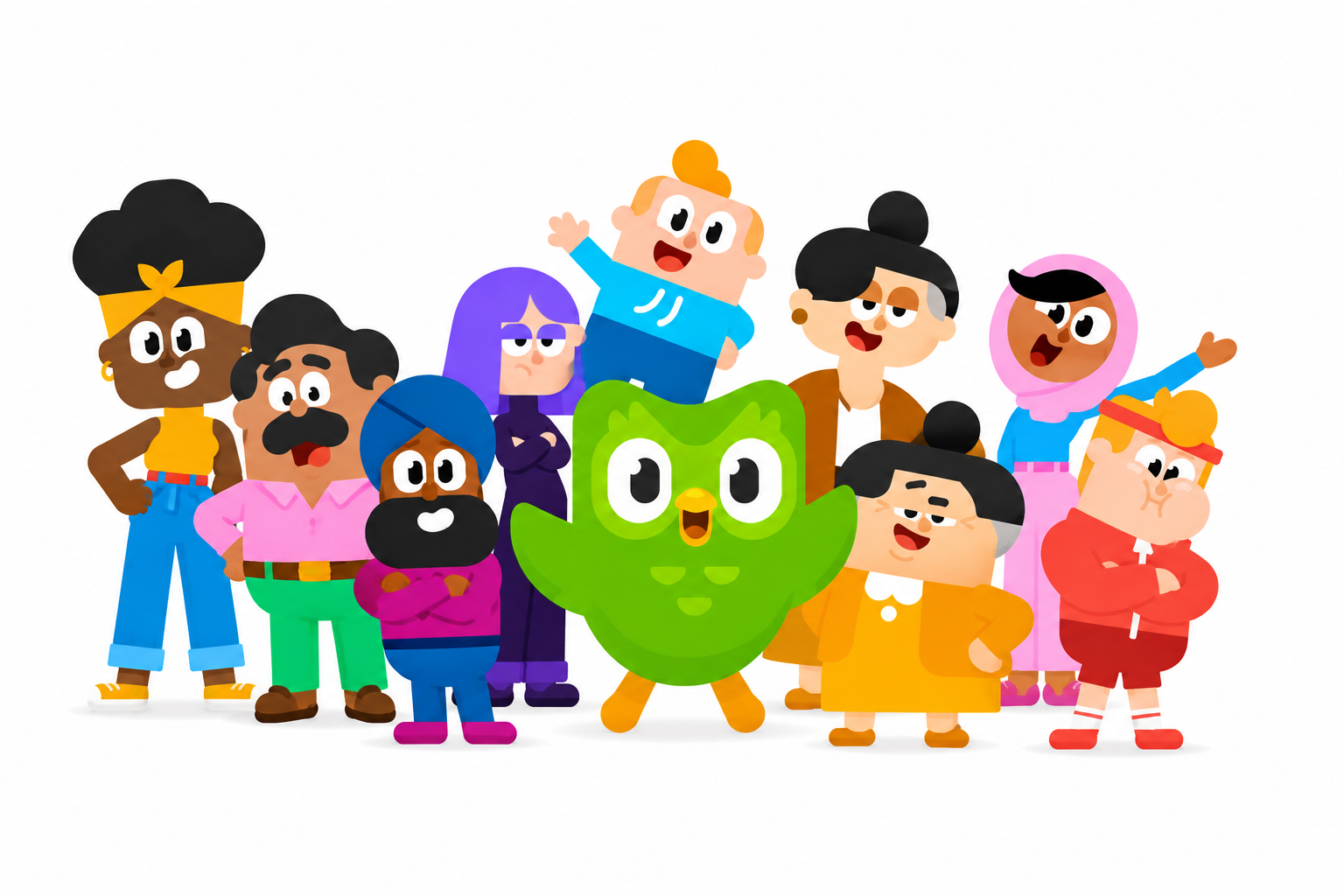
And Duolingo has taken that idea even further. The company has built an entire cast of characters around Duo, each with their own personalities and quirks.
Lily is sarcastic. Zari is energetic. Eddy is a dad. Oscar is... well, Oscar.
And what does all of this mean?
It means that when Duolingo talks to you, it no longer feels like a company is talking to you.
It feels like a group of characters.
And when your brand has a personality people already recognize, you don't have to keep introducing yourself.
How Duolingo Uses Social Media To Entertain Instead of Sell?
Most brands create content because they have something to sell.
If Duolingo did that, it would look something like this: "Learn Spanish with Duolingo. Download the app today."
Nothing wrong with that.
It's just incredibly boring.
Duolingo figured out that people don't go online thinking, "we hope a language-learning company tries to sell us something today."
They go online to be entertained.
So, that's what Duolingo gives them.
Duo becoming a Squid Game guard. Duo desperately trying to get Dua Lipa's attention.
Duo getting into completely unnecessary arguments.
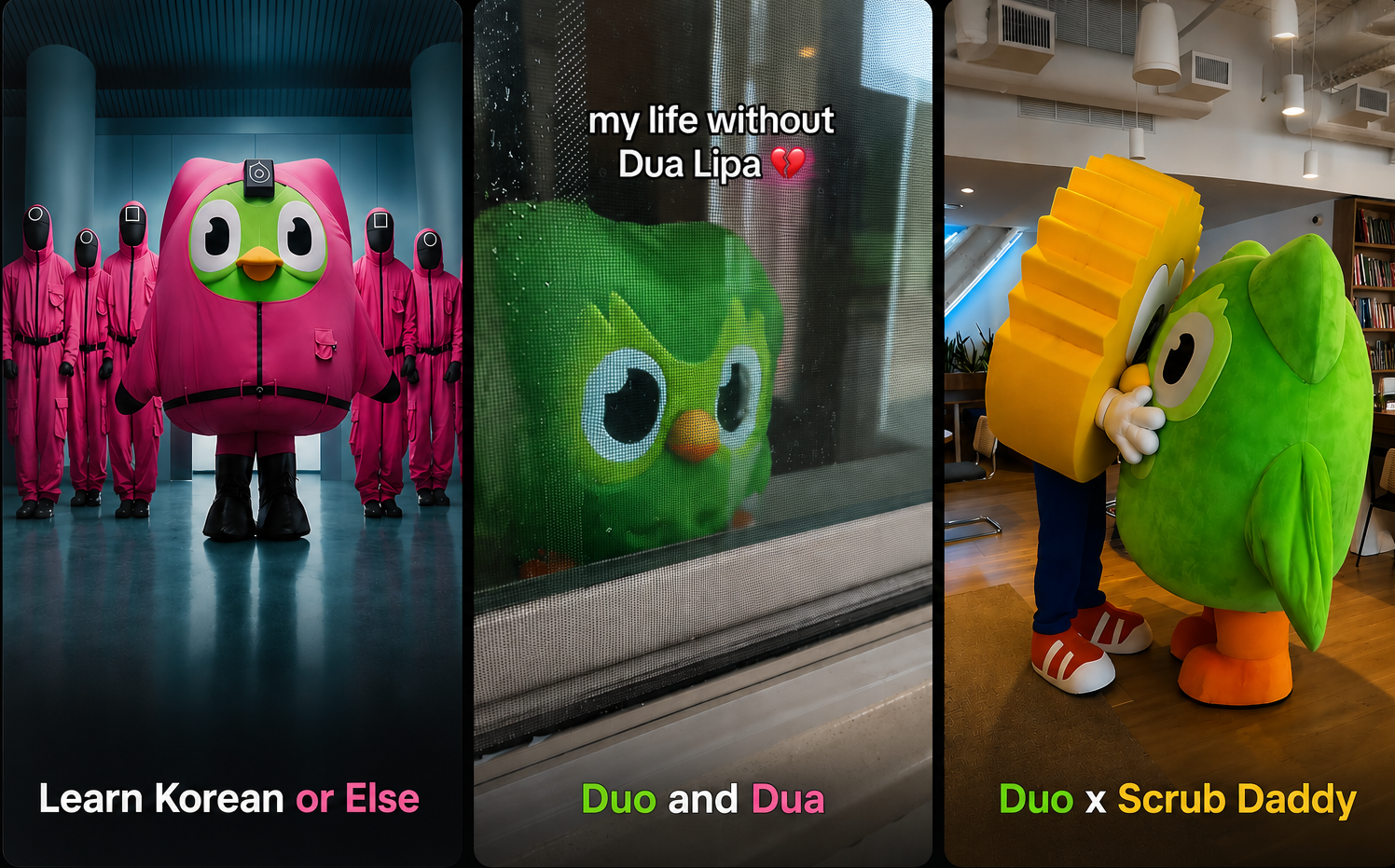
The product isn't always the subject.
The brand is.
And that distinction matters.
Duolingo's content works because it fits the way people already consume content online.
Short, funny, and built around a recognizable character.
And most importantly, you don't need to be learning a language to understand the joke.
Instead of forcing its product down our throats, Duolingo creates content that first fits the market.
The result?
Duo isn't just the face of the app anymore. He's become the content.
So, before you make your next piece of content, ask yourself: “Would anyone want to see this if they weren't interested in buying from me?”
How Gamification Turns Duolingo's Product into a Marketing Engine?
Duolingo's marketing doesn't stop when you close Instagram.
It's built into the product itself.
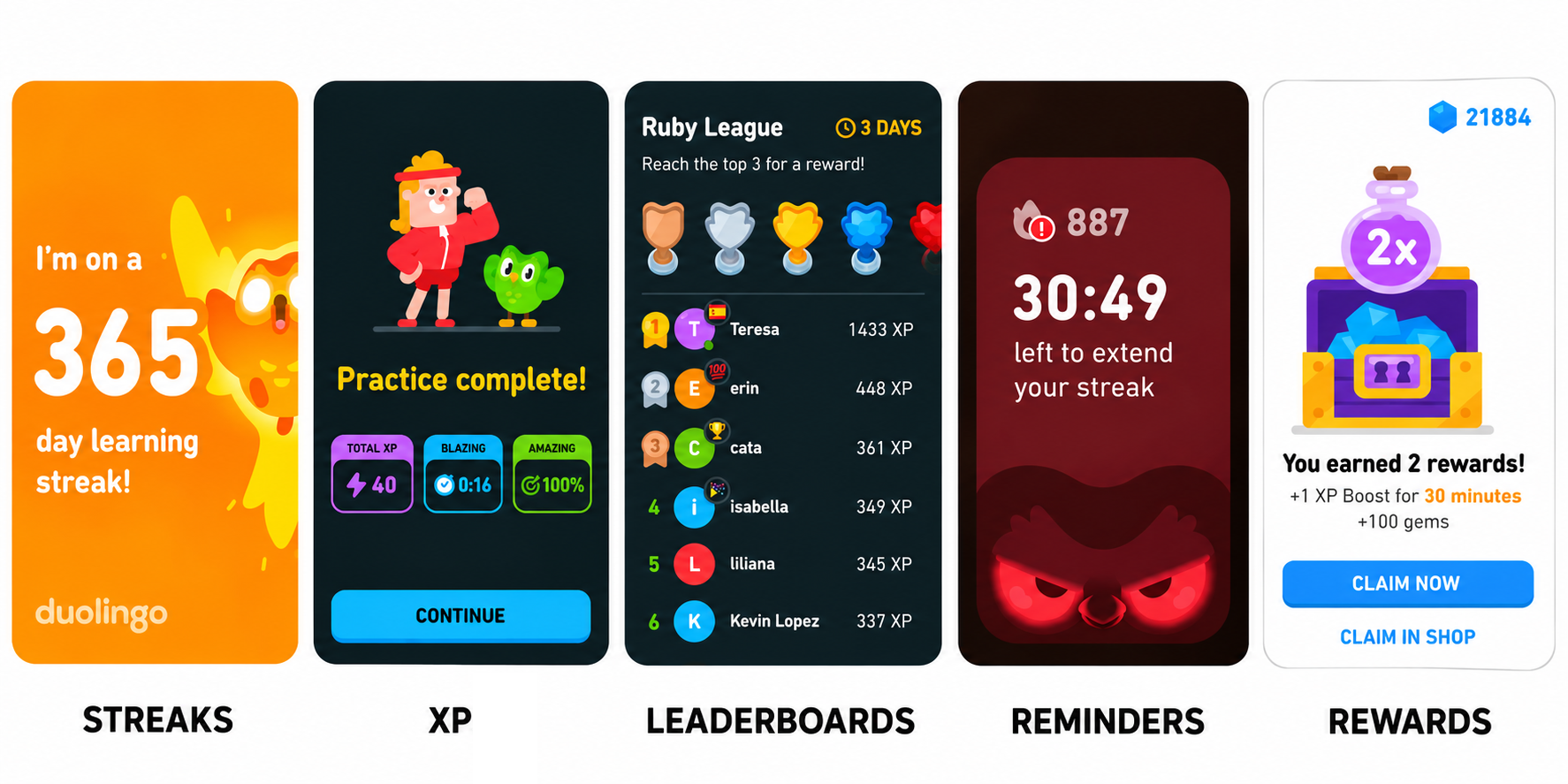
You finish a lesson. You get XP(Experience Points).
You do a lesson daily to keep your streak alive.
You spend more time on the app to move up the leaderboard and get into the higher leagues.
And if you don't, Duolingo reminds you that your 47-day streak is apparently more important than whatever else it is that you had planned for the evening.
And that's good marketing for you.
Every time someone shares their 365-day streak, Duolingo gets another piece of organic attention.
Every time someone complains about losing their streak, someone else learns that Duolingo has streaks.
And every time friends compete on a leaderboard, there is another reason to come back.
The product creates engagement, that engagement creates conversations, and those conversations bring more people to the product.
That's Duolingo's growth loop.
And there's some pretty strong evidence that this works.
Duolingo runs more than 1,000 A/B tests every quarter, constantly tweaking the product to see what gets people to come back.
And Duolingo itself says that the majority of its growth over the past decade has come through word of mouth.
In other words, Duolingo isn't just trying to get people through the door.
What it's trying to do is make the product so good that people bring someone else with them.
Why You Can't Just Copy Duolingo's Marketing Strategy?
After reading all this, you might be thinking:
"Well, that's easy. I'll just make my company funny."
No.
That's not how this works.
Duolingo didn't become Duolingo because someone decided to make a few memes.
Think about it.
The memes work because there's already a brand with a unique personality.
There's also a product people have built a habit around, a character people recognize, and a team that's willing to try things, see what works, and do more of it.
And that's the important part.
Duolingo's growth engine isn't one tactic you can copy. It's a combination of things that reinforce each other:
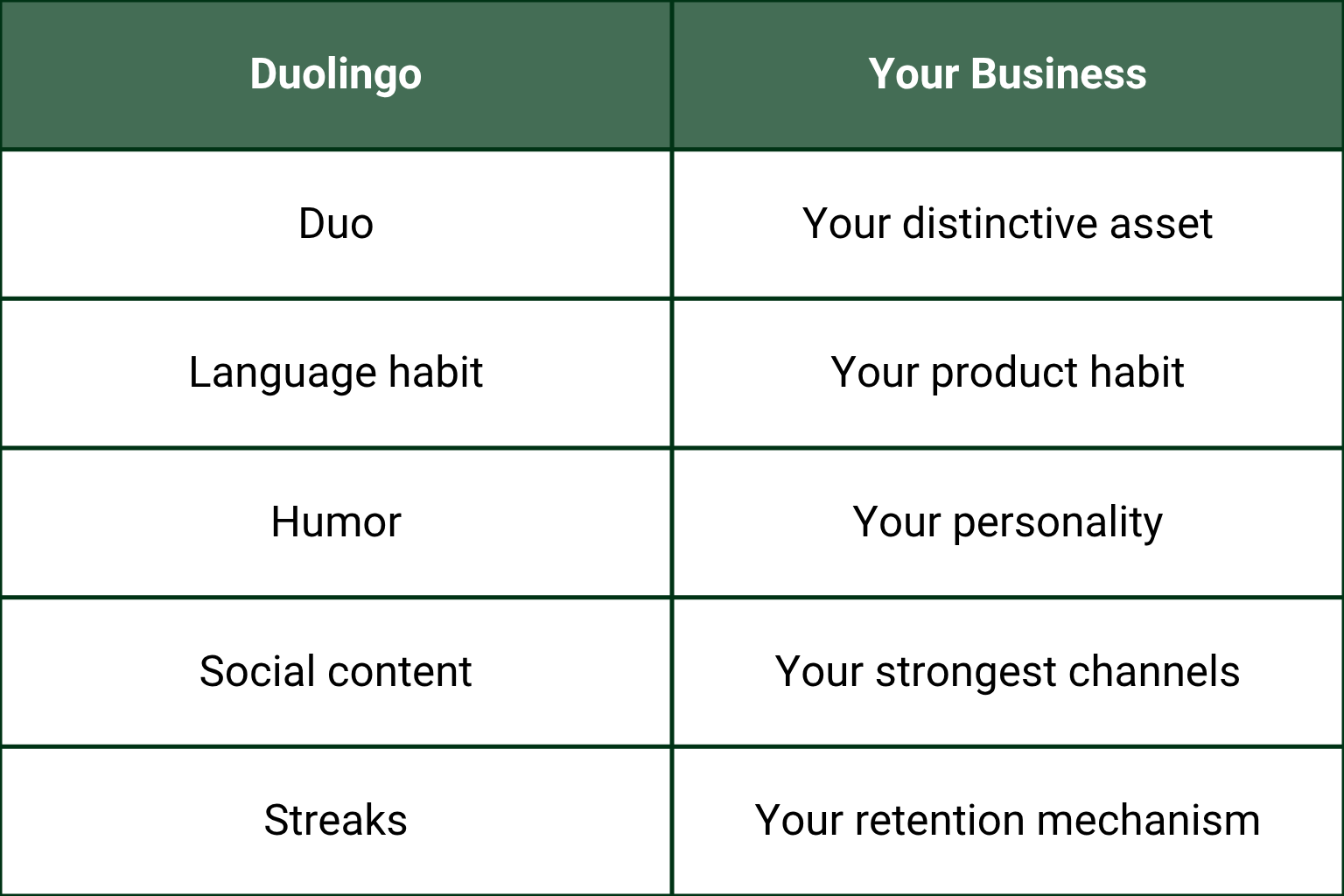
That's what you need to learn from Duolingo.
A B2B software company doesn't need a crazy mascot.
A consulting firm doesn't need to start threatening clients about their streaks.
And a bank probably shouldn't suddenly become the funniest account on Instagram.
So stop worrying about building a brand like Duolingo.
Start figuring out what makes your brand different, then build your content around that.
Because the goal isn't to become the next Duolingo.
It's to become the first version of you.
Conclusion
The interesting thing about Duolingo isn't any one of the things they do. It's how each of those things works together.
The characters make the brand recognizable, the social media content gets people talking about it, and the way the product is designed gives people a reason to keep coming back.
And these are the things we would focus on if we were building a brand today.
What makes your brand recognizable?
What could you become known for beyond the product you are selling?
What kind of content would your audience want to consume?
And most importantly, does your product do something to give people a reason to keep coming back?
Because although content can get you attention, attention doesn't mean much by itself.
If someone sees your post, laughs at it, maybe even likes it, but then forgets about you and your brand five minutes later, you are doing things wrong.
What does your content need to do?
Your content needs to get someone into your brand, your brand needs to get them into your product, and the product itself needs to give them a reason to stick around.
When these things work together, that's when you've got a well-oiled machine that grows your brand.
And, funnily enough, we first came across Duolingo when a friend mentioned that he had a one-year streak.
That's what made us curious about the company in the first place, and that eventually led us down this rabbit hole.
Now, I almost have a one-year streak learning German.
And you see, that's exactly why I think Duolingo is a brand worth studying.